

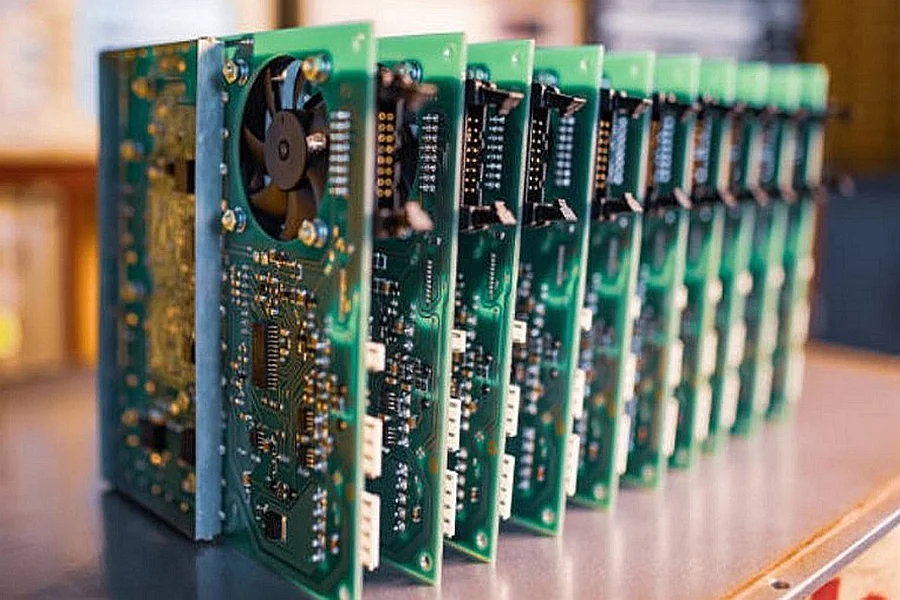
A 6 Layer PCB is a multilayer printed circuit board that contains six conductive layers separated by insulating substrates. Typically, these layers include a combination of signal, power, and ground planes, providing enhanced electrical performance, improved thermal management, and greater design flexibility. Compared to 4 Layer or Double-Sided PCBs, a 6 Layer PCB allows for more complex circuitry and denser component placement, making it ideal for advanced electronic applications.
Industries such as telecommunications, computing, medical devices, automotive electronics, and aerospace frequently rely on 6 Layer PCBs to meet the demands of modern, high-speed, and high-reliability electronics.
Advantages of 6 Layer PCBs
The design of a 6 Layer PCB offers several key benefits that make it essential for complex electronic systems:
- High Circuit Density: Allows more components and interconnections within a smaller board area.
- Improved Signal Integrity: Dedicated power and ground planes reduce noise and electromagnetic interference.
- Efficient Power Distribution: Multiple planes support stable voltage levels and minimize voltage drops.
- Enhanced Thermal Management: Additional layers help dissipate heat efficiently, protecting sensitive components.
- Design Flexibility: Supports advanced layouts, including high-speed, high-frequency, and mixed-signal circuits.
These advantages make 6 Layer PCBs suitable for demanding applications where performance, reliability, and compact design are critical.
Applications of 6 Layer PCBs
6 Layer PCBs are widely used across industries that require high-density circuits and advanced functionality:
- Telecommunications: High-speed routers, switches, and 5G devices utilize 6 Layer PCBs to manage complex signal routing.
- Computing Devices: Servers, high-performance motherboards, and graphics cards rely on 6 Layer PCBs for dense and reliable circuitry.
- Medical Electronics: Diagnostic machines, monitoring equipment, and imaging devices require precise and high-quality PCB designs.
- Automotive Electronics: Electric vehicle control units, infotainment systems, and ADAS components benefit from multilayer designs.
- Aerospace and Defense: Radar systems, avionics, and navigation systems demand multilayer PCBs for high reliability and performance.
These applications demonstrate the versatility of 6 Layer PCBs in advanced electronic systems requiring efficiency, reliability, and performance.
Key Features of 6 Layer PCBs
A 6 Layer PCB is defined by several essential features that make it suitable for high-performance electronics:
- Six Conductive Layers: Typically include signal layers and power/ground planes for optimized performance.
- Plated Through Holes (PTH) and Microvias: Ensure interconnections between layers for seamless electrical pathways.
- Compact Design: Supports dense circuits without increasing the overall board size.
- Versatility in Components: Compatible with surface-mount technology (SMT), through-hole components, and fine-pitch devices.
- Durability: Built to withstand thermal stress, mechanical loads, and high-frequency operations.
These features make 6 Layer PCBs a preferred choice for designers seeking high reliability and efficient performance in complex electronic applications.
Challenges in 6 Layer PCB Manufacturing
While 6 Layer PCBs offer significant advantages, they also present manufacturing challenges that require careful attention:
- Complex Design Layouts: Requires precise planning to avoid signal interference and ensure optimal routing.
- Thermal Management: Effective heat dissipation must be engineered to protect sensitive components.
- High-Precision Manufacturing: Drilling, plating, and alignment of six layers demand advanced machinery and expertise.
- Rigorous Testing: Boards must undergo extensive quality control to ensure functionality and layer connectivity.
Overcoming these challenges requires experienced designers and manufacturers with advanced equipment and stringent quality control protocols.
The Future of 6 Layer PCBs
As electronic devices continue to advance, 6 Layer PCBs remain crucial for high-performance applications. Emerging technologies such as 5G, IoT, AI-driven electronics, electric vehicles, and aerospace systems demand multilayer boards capable of managing dense circuitry, high-speed signals, and high reliability.
Future trends include:
- Advanced Substrates: High-frequency, low-loss materials to enhance signal integrity.
- Microvias and HDI Technology: Finer interconnections for compact and high-density designs.
- Improved Thermal Solutions: Enhanced cooling techniques for high-power applications.
- Automation in Production: Streamlined manufacturing for consistent quality and faster turnaround times.
These trends ensure that 6 Layer PCBs will continue to serve as a backbone for advanced electronic designs across industries.
Conclusion
A 6 Layer PCB provides high-density, reliable, and efficient solutions for complex electronic systems. By offering enhanced signal integrity, efficient power distribution, and thermal management, these boards meet the rigorous demands of telecommunications, computing, automotive, medical, and aerospace applications.
Partnering with a trusted 6 Layer PCB Manufacturer ensures precise fabrication, high-quality standards, and timely delivery. With the right manufacturer, businesses and engineers can confidently develop advanced electronic products that meet performance requirements while maintaining cost-effectiveness.
