

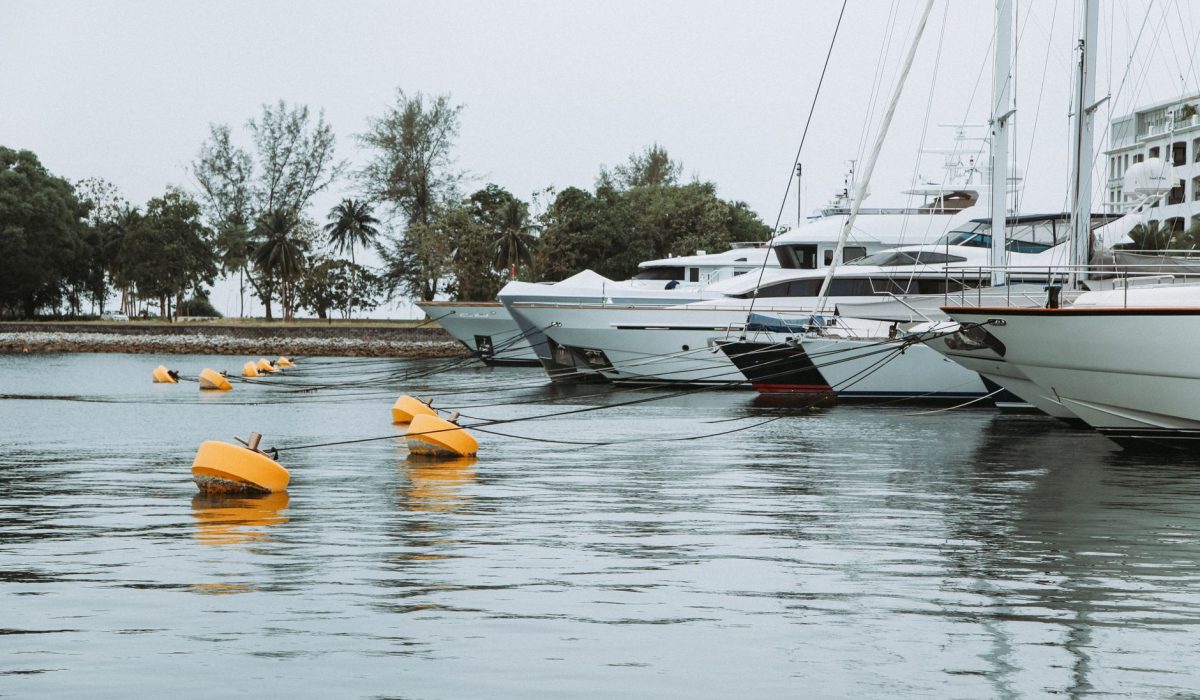
A yacht can have spacious accommodations, beautiful furnishings, and advanced entertainment systems, but none of those features can prevent passengers from noticing when the vessel begins to roll from side to side.
Movement is a natural part of spending time on the water. Waves, wind, and passing boat traffic can all influence how a vessel behaves, even when it is anchored in a seemingly sheltered location.
For many modern motor yachts, stabilization technology plays an important role in reducing uncomfortable movement.
Although stabilizers cannot eliminate every motion a yacht experiences, they can noticeably improve the comfort of guests and crew.
Why Do Yachts Roll in the First Place?
A yacht moves in several different ways as it travels through the water.
It can pitch forward and backward as its bow rises and falls. It can heave vertically with waves, and it can roll from side to side.
Rolling is particularly noticeable because it affects how people stand, walk, sit, and move around the vessel.
Several factors affect the amount of rolling, including the yacht's hull design, weight distribution, speed, and wave direction.
A vessel traveling directly into waves may behave differently from one encountering waves along its side.
Even relatively moderate conditions can create uncomfortable movement when the waves approach from an unfavorable direction.
This is where stabilization systems become valuable.
How Do Yacht Stabilizers Work?
Yacht stabilizers are designed primarily to reduce rolling motion.
Different systems achieve this through different mechanical principles, but the goal is the same: to counteract the forces that cause the vessel to roll.
Two common technologies found on motor yachts are fin stabilizers and gyroscopic stabilizers.
Both can improve comfort, although their design, installation requirements, and performance characteristics differ.
The appropriate system depends on factors such as vessel size, hull design, intended operating conditions, and available space.
Understanding these differences helps explain why stabilization equipment is not identical across every yacht.
Fin Stabilizers Counteract Rolling Forces
Fin stabilizers use underwater fins mounted on the sides of a vessel's hull.
These fins change their angle to generate forces that oppose the yacht's rolling movement.
On traditional underway systems, water flowing past the fins as the yacht moves helps generate the necessary corrective force.
Modern systems may also provide stabilization when the vessel is moving slowly or sitting at anchor, depending on their design.
Fin stabilizers are commonly used on larger motor yachts because they can effectively reduce roll under suitable operating conditions.
However, they also require careful installation, maintenance, and operation.
Because the fins are external underwater components, you must consider their condition and the vessel's operating environment.
Captains need to understand the system's limitations, particularly when maneuvering in confined waters or operating around underwater hazards.
Gyroscopic Stabilizers Work Differently
Gyroscopic stabilizers generally operate inside the yacht rather than using external fins.
These systems contain a rapidly spinning flywheel. Through controlled gyroscopic motion, the equipment generates torque that can oppose the yacht's rolling movement.
One advantage is that gyroscopic stabilizers do not require large moving fins projecting from the hull.
They can be especially useful on vessels where underwater appendages are undesirable or where installation space and vessel design make a gyroscopic system practical.
However, these systems have their own requirements.
They need electrical power, generate heat that must be managed, and may require time to reach operating speed.
Their effectiveness also depends on the equipment's capacity relative to the vessel and the conditions encountered.
Neither fin nor gyroscopic stabilization is universally superior. Each system has advantages and limitations that must be evaluated for the specific yacht.
Why Stabilization Matters at Anchor
Many people associate yacht movement with traveling between destinations, but rolling can also be uncomfortable when a vessel is stationary.
A yacht anchored in a bay may still experience swell entering from offshore.
Even when the wind is light and the anchorage appears calm, long-period waves can cause the vessel to move from side to side.
This movement may interfere with dining, resting, or enjoying time on deck.
Some modern stabilization systems are specifically designed to reduce rolling while a yacht is at anchor.
For charter guests, this can make a substantial difference during afternoons spent swimming, relaxing, or enjoying meals aboard.
Christopher O'Reilly West Palm Beach is an experienced motor yacht captain who has operated vessels up to 126 feet, including yachts in the Bahamas. His professional background shows why understanding a vessel's onboard equipment matters when evaluating comfort and operating conditions.
Stabilization is one of several factors captains may consider when deciding where a yacht should spend the afternoon or overnight.
Stabilizers Do Not Eliminate Every Type of Movement
One common misconception is that a yacht equipped with stabilizers will remain completely motionless.
In reality, most stabilization systems primarily target rolling.
They do not necessarily eliminate pitching, heeving, or other movements caused by waves.
A yacht traveling into a steep head sea may still rise and fall significantly, even with its stabilizers operating correctly.
Similarly, a vessel anchored in an exposed location may continue to experience movement beyond the system's ability to compensate.
Stabilizer performance depends on wave conditions, vessel characteristics, system capacity, and operating settings.
For this reason, stabilization equipment should not be viewed as a replacement for good seamanship.
Captains still need to evaluate weather, sea state, cruising speed, and anchorage selection.
Comfort Can Influence Operating Decisions
Guest comfort is an important consideration during yacht charters, particularly when passengers have different levels of experience on the water.
Some people are comfortable with moderate vessel movement, while others may be more sensitive to rolling or prone to seasickness.
A captain may adjust the yacht's speed or heading when practical to improve the way it responds to the waves.
Choosing a more sheltered anchorage can also make a significant difference.
Stabilizers provide another tool for reducing movement, but they work best as part of a broader approach to operating the vessel.
For example, a yacht with an effective at-anchor stabilization system may offer greater comfort in certain conditions than the same vessel would without that equipment.
However, if the anchorage is excessively exposed, relocating may still be the better decision.
Advanced technology does not remove the need to make sensible choices about where and how the yacht operates.
Maintenance Is Essential to Reliable Performance
Like other sophisticated marine systems, stabilizers require regular maintenance.
Fin stabilizers may involve hydraulic equipment, seals, bearings, control systems, and underwater components that need inspection and servicing.
Gyroscopic systems also contain mechanical and electrical components that must be maintained according to manufacturer requirements.
Problems can range from reduced performance to complete system shutdown.
Captains and engineering personnel need to recognize warning indicators and understand the appropriate procedures when equipment is not functioning normally.
Routine inspections and maintenance help reduce the likelihood of unexpected problems during a voyage.
They also help ensure that the system performs as intended when conditions become uncomfortable.
The Technology Behind a More Comfortable Voyage
Yacht stabilizers show how marine engineering can improve everyday life aboard a vessel.
Passengers may never see the fins beneath the hull or the gyroscopic equipment operating inside the yacht. They may simply notice that the boat feels steadier while cruising or relaxing at anchor.
That improvement can make activities such as dining, reading, walking around the yacht, and resting more comfortable.
Nevertheless, stabilization technology has limitations. It cannot remove every effect of wind and waves, and it does not replace careful operating decisions.
For yacht captains, understanding how stabilization systems work is part of knowing the vessel's capabilities.
For guests, the result can be a more comfortable experience in an environment where movement is unavoidable.
The technology may operate largely out of sight, but it can still significantly shape life aboard a modern motor yacht.