

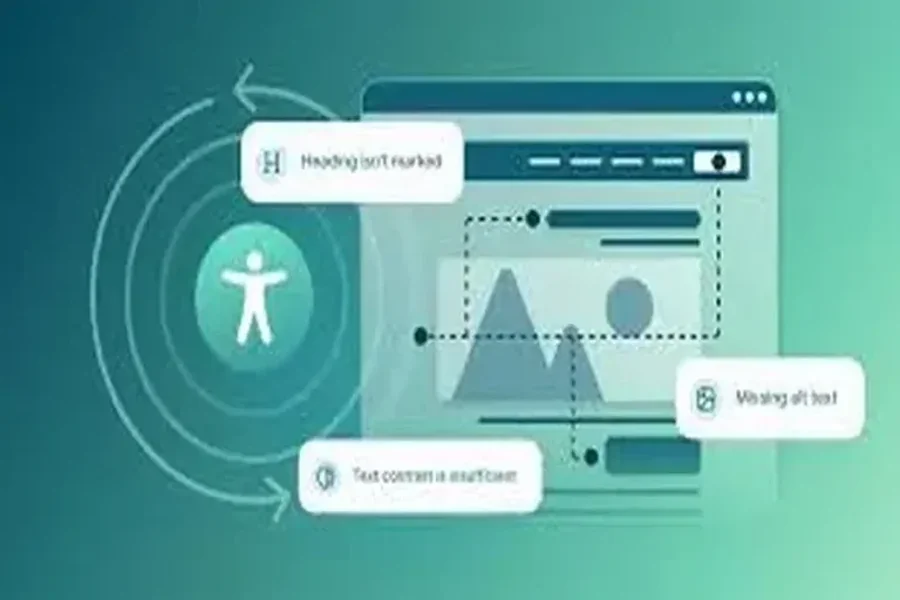
Automated checks are a powerful baseline for inclusive products, but the accessibility surface area keeps growing—dynamic UIs, custom widgets, internationalization, and complex states. accessibility testing software helps teams scan systematically for structural defects: missing labels, invalid roles, color contrast failures, orphaned controls, and misuse of landmarks. When these scanners run in CI on every pull request and again at merge, they prevent obvious regressions from slipping in. At release time, a curated set of journeys—sign-in, checkout, account settings—receives deeper manual and assistive-technology (AT) validation. Evidence (screenshots, DOM snippets, logs) attaches to failures so triage is fast and blameless, and fixes can be pushed confidently within the sprint.
Layered on top of that foundation, teams increasingly need intelligence that scales with modern front-ends. Computer vision can spot subtle visual regressions that harm readability or focus visibility. NLP models can flag ambiguous link text or redundant headings that confuse screen reader users. Model-driven exploration can programmatically “keyboard-walk” interfaces to detect traps, focus loss, or unreachable controls—issues that are notoriously hard to catch with static rules. Impact-based selection prioritizes checks on the templates most likely to regress given recent code churn and complexity, keeping pipelines fast without skipping risky areas. Meanwhile, data generation tools can assemble rich, privacy-safe scenarios (e.g., error states, long labels, multiple validation messages) that reveal accessibility defects earlier in the cycle. All of this intelligence augments—not replaces—manual testing and AT sessions, which remain essential for judging clarity, cognitive load, and real-world usability.
With that context in place, it’s clear why modern programs benefit from software testing ai. AI-assisted accessibility brings three durable advantages: scale, speed, and signal quality. Scale comes from generating more meaningful checks than a team could craft by hand—especially across locales and device/browser permutations. Speed comes from impact-based execution and self-healing that reduces brittle failures when the DOM shifts. Signal quality improves when vision models and anomaly detectors elevate problems that users actually feel: invisible focus, off-screen content, jittery layout, or unannounced errors. Guardrails matter: set conservative thresholds, require human approval before persisting locator or rule changes, version prompts and outputs for audits, and protect privacy with synthetic data. Done right, the combination turns accessibility from a periodic audit into an always-on capability—one that helps you ship inclusive experiences at the pace your business demands.
