

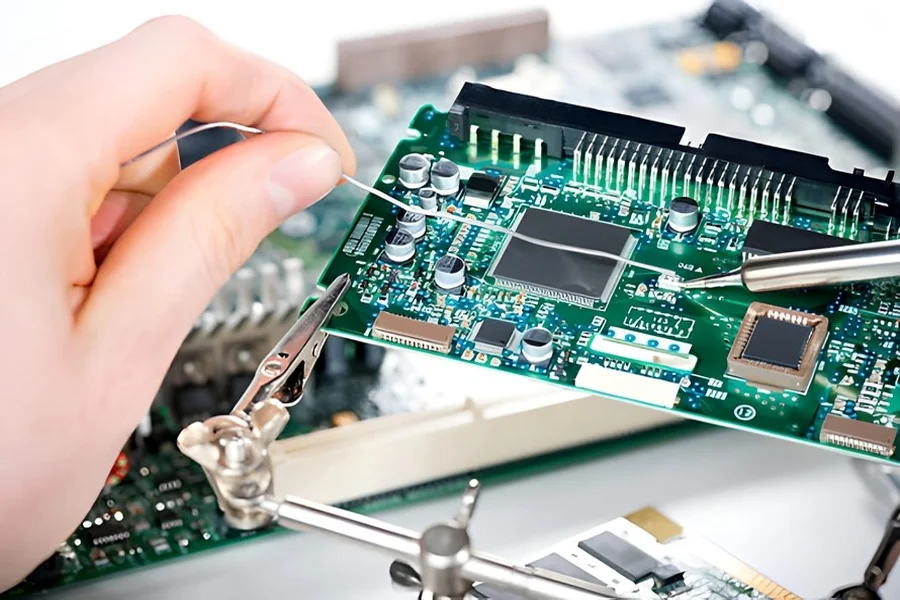
The healthcare industry demands the highest levels of precision, reliability, and safety — and medical PCB assembly plays a critical role in meeting those standards. From diagnostic devices to life-saving monitoring systems, medical electronics depend on advanced printed circuit board (PCB) assemblies to ensure flawless performance under demanding conditions. These assemblies are built to deliver accuracy, durability, and long-term reliability, meeting strict medical regulations and performance benchmarks.
What Is Medical PCB Assembly?
Medical PCB assembly refers to the process of designing, manufacturing, and assembling printed circuit boards specifically for medical applications. These PCBs serve as the foundation for various electronic medical devices such as heart rate monitors, MRI machines, infusion pumps, and portable diagnostic tools. Unlike standard PCBs, medical-grade boards require specialized materials, controlled manufacturing environments, and rigorous testing to guarantee biocompatibility, high reliability, and consistent functionality.
The process involves precise component placement, advanced soldering technologies, and thorough inspections to ensure compliance with international medical standards like ISO 13485 and IPC Class 3.
Materials and Design Considerations in Medical PCB Assembly
High-Quality Materials
Medical applications often require high-temperature resistant and low-loss materials like FR-4, Rogers, or polyimide to maintain electrical integrity. For implantable or sterilizable devices, special substrates and coatings are used to ensure chemical and thermal stability.
Miniaturization and Density
Modern medical devices are becoming smaller and more portable. To meet these needs, medical PCB assembly often incorporates HDI (High-Density Interconnect) and microvia technology, enabling compact yet highly functional boards.
Biocompatibility and Safety
Medical-grade PCBs must not only perform reliably but also remain safe for human interaction. Surface finishes like ENIG (Electroless Nickel Immersion Gold) are preferred for their corrosion resistance and long-term stability, ensuring both electrical performance and patient safety.
Types of Medical PCB Assemblies
-
Rigid PCBs
Used in stationary devices like X-ray systems or imaging equipment, rigid boards offer excellent mechanical strength and long-term stability.
-
Flexible PCBs
Flexible circuits are essential for wearable and compact medical devices such as fitness trackers, hearing aids, or implantable sensors. Their flexibility allows for movement without sacrificing performance.
-
Rigid-Flex PCBs
Combining the benefits of rigid and flexible boards, these assemblies are ideal for compact devices that require both durability and flexible design — such as endoscopic tools or portable diagnostic systems.
-
Multilayer PCBs
For complex medical electronics like MRI and ultrasound machines, multilayer PCBs provide the required high-speed signal transmission and power integrity.
Key Steps in Medical PCB Assembly
-
Component Procurement and Verification
All components used in medical PCB assembly must be traceable and meet industry standards. Each part undergoes quality verification to prevent any potential malfunction in critical applications.
-
Surface Mount Technology (SMT) Assembly
Using automated SMT processes, components are accurately placed and soldered. Medical boards often require fine-pitch and micro-BGA assembly, demanding extreme precision during soldering.
-
Through-Hole Technology (THT)
Power components and connectors are secured using THT for greater mechanical strength, essential for devices that experience movement or vibration.
-
Inspection and Testing
Every medical PCB undergoes 100% inspection — including automated optical inspection (AOI), X-ray testing, and functional testing — to ensure reliability and accuracy before deployment.
-
Cleaning and Packaging
Medical boards are cleaned in anti-static and contamination-free environments. Proper packaging ensures they remain free from dust, moisture, and electrostatic damage.
Applications of Medical PCB Assembly
Medical PCBs are found in nearly every healthcare electronic system. Common applications include:
- Diagnostic Equipment: MRI scanners, CT machines, and blood analyzers.
- Therapeutic Devices: Defibrillators, infusion pumps, and ventilators.
- Patient Monitoring Systems: ECG, EEG, and pulse oximeters.
- Wearable Health Devices: Smart health trackers and portable glucose monitors.
- Surgical and Imaging Systems: Endoscopic tools, robotic surgery systems, and imaging modules.
Each of these devices relies on the accuracy and stability of medical PCB assembly to perform its vital functions.
Benefits of High-Quality Medical PCB Assembly
-
Exceptional Reliability
Medical devices often operate continuously or in life-critical scenarios. Precision PCB assembly ensures reliability and long-term performance under any condition.
-
High Signal Integrity
Advanced assembly methods maintain signal quality, which is crucial in high-frequency applications such as imaging and monitoring systems.
-
Compliance with Industry Standards
Manufacturers must comply with ISO 13485, IPC Class 3, and FDA requirements, ensuring that every board meets global quality benchmarks.
-
Enhanced Miniaturization and Functionality
High-precision assembly enables compact designs with multiple integrated features, making modern medical devices more efficient and user-friendly.
-
Improved Thermal Management
Efficient thermal design and controlled soldering processes ensure stable operation even under high loads or extended use.
Challenges in Medical PCB Assembly
Medical PCBs must meet unique challenges such as:
- Managing tight tolerances and fine-pitch components.
- Maintaining cleanliness and avoiding contamination.
- Ensuring complete traceability of materials and processes.
- Meeting strict certification and documentation requirements.
Overcoming these challenges requires specialized expertise, automated production systems, and an unwavering commitment to quality control.
Conclusion
Medical PCB assembly is the foundation of modern healthcare technology — ensuring safety, precision, and reliability in every medical device. From small wearable devices to advanced imaging systems, medical PCBs enable innovation and improved patient outcomes.
If your business is looking for a trusted manufacturing partner, choosing an experienced PCB assembly company ensures that your medical devices meet the highest quality standards. A reliable assembly partner combines advanced technology, quality assurance, and medical compliance to bring your innovative healthcare solutions to life with precision and confidence.
