

The Hidden Infrastructure Behind Every Dental Visit
When patients enter a dental office, most of what they experience is visible and direct. They see the treatment rooms, the equipment used during their care, and the interaction with the clinical team. What is not visible, however, is one of the most important components of modern dentistry: the sterilization system that operates continuously behind the scenes.
Sterilization is not a single step. It is an integrated clinical process supported by specialized equipment, strict protocols, and regulatory standards designed to ensure that every instrument used in patient care is thoroughly cleaned, disinfected, and safe for reuse.
At Georgian Mall Family Dental, sterilization is treated as a foundational system of care rather than a background task. It is an essential part of maintaining a controlled, safe, and consistent clinical environment.
The Role of Autoclaves in Dental Sterilization
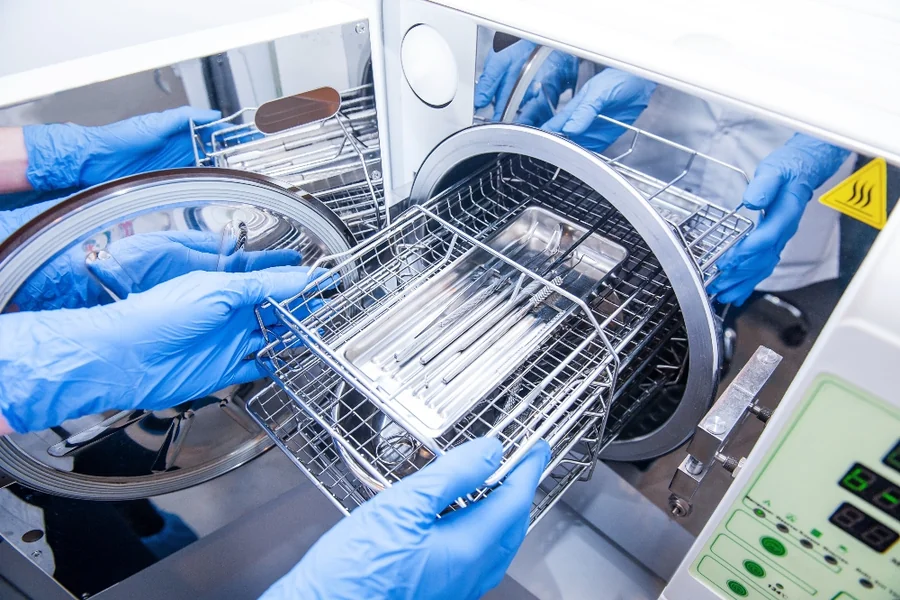
At the center of modern dental sterilization is the autoclave. This machine uses high-pressure steam at carefully controlled temperatures to eliminate bacteria, viruses, and other microorganisms from dental instruments.
Unlike basic cleaning methods, autoclaves achieve true sterilization, meaning that all forms of microbial life are destroyed. Instruments are placed inside sealed chambers where steam penetrates every surface, ensuring complete decontamination.
The process is both highly standardized and closely monitored. Cycle times, temperature levels, and pressure readings are all tracked to ensure that each sterilization cycle meets strict clinical requirements.
Georgian Mall Family Dental utilizes autoclave systems as part of a consistent sterilization protocol designed to maintain the highest level of instrument safety between patients.
Instrument Processing: From Use to Sterile Storage
Sterilization does not begin with the autoclave. It begins immediately after instruments are used. The first step is careful handling and transport to a designated cleaning area, where instruments are sorted and prepared for processing.
This phase includes pre-cleaning procedures that remove visible debris and reduce biological contamination before sterilization. Instruments are then placed through ultrasonic cleaning systems that use sound wave technology to dislodge microscopic particles from surfaces and joints.
Once cleaned, instruments are inspected, packaged, and sealed before entering the sterilization cycle. Packaging plays a critical role because it maintains sterility after processing and ensures that instruments remain uncontaminated until they are needed for patient care.
This structured sequence is part of a tightly controlled system used at Georgian Mall Family Dental to ensure consistency and reliability in every step of instrument preparation.
The Importance of Controlled Sterile Storage
After sterilization, instruments are not immediately returned to clinical use. They are stored in a controlled environment designed to maintain sterility until the moment they are needed.
Sterile storage areas are organized to prevent cross contamination and to ensure that packaged instruments remain intact and protected. Each package is labeled and tracked, allowing clinical staff to maintain clear oversight of instrument usage and rotation.
This system ensures traceability and accountability, both of which are essential in maintaining clinical safety standards.
Georgian Mall Family Dental maintains structured storage protocols to ensure that every instrument used in patient care has passed through a verified sterilization cycle.
Disposable Barriers and Cross Contamination Prevention
In addition to instrument sterilization, modern dental offices use disposable barriers and protective coverings throughout treatment areas. These include wraps for equipment handles, coverings for surfaces, and single-use items that are discarded after each patient.
This layered approach reduces the risk of cross contamination and helps maintain a clean clinical environment between appointments.
Disposable systems are used in combination with sterilized instruments to create multiple levels of protection. This redundancy is intentional and reflects modern infection control standards in dentistry.
At Georgian Mall Family Dental, barrier systems are used consistently across treatment rooms to reinforce a controlled and hygienic environment for every patient.
Waterline Management and Clinical Safety Systems
Dental equipment often relies on water systems for cooling and irrigation during procedures. These waterlines require their own form of monitoring and maintenance to ensure safety.
Specialized treatment protocols are used to clean and disinfect waterlines regularly, preventing buildup and maintaining safe water quality standards. This process is typically managed through automated systems and scheduled maintenance routines.
Waterline management is an often overlooked but critical component of overall sterilization and infection control in dental environments.
Georgian Mall Family Dental incorporates waterline maintenance into its broader safety systems to ensure that all clinical equipment functions within strict hygiene standards.
Monitoring, Documentation, and Compliance Systems
Sterilization is not only a physical process but also a documented one. Modern dental practices maintain detailed records of sterilization cycles, equipment maintenance, and compliance checks.
These records ensure that every sterilization cycle can be verified and traced if needed. Monitoring systems track temperature, pressure, and duration for each autoclave cycle, providing a complete log of instrument processing.
This level of documentation is part of broader regulatory requirements in dental care and contributes to overall clinical accountability.
Georgian Mall Family Dental follows structured documentation protocols to ensure that sterilization processes are consistently monitored and verified.
Why Sterilization Systems Matter for Patient Care
Although sterilization processes are not visible during a dental visit, they directly influence every aspect of patient care. These systems ensure that instruments used during examinations and procedures are safe, clean, and free from contamination.
This behind-the-scenes infrastructure allows dental professionals to focus on delivering care without compromise to safety or consistency.
For patients, the result is a clinical environment where safety is not assumed but systematically maintained through technology, process, and oversight.
Georgian Mall Family Dental integrates these systems as a core part of its commitment to maintaining a controlled and reliable care environment.
The Science of Safety in Modern Dentistry
Sterilization in dentistry is grounded in microbiology, engineering, and regulatory science. Every step of the process is designed based on evidence-based protocols that define how contaminants are eliminated and how sterile conditions are maintained.
This scientific foundation ensures that dental care environments operate within strict safety margins. It also ensures consistency across every patient interaction, regardless of the type of procedure being performed.
Modern sterilization systems represent the intersection of science and clinical practice, translating laboratory standards into everyday healthcare delivery.
A System Designed for Consistency and Trust
While patients primarily experience the visible aspects of dental care, the true reliability of a dental office is built on systems that operate quietly in the background. Sterilization is one of the most important of these systems.
Through autoclaves, instrument processing workflows, sterile storage, barrier techniques, and rigorous documentation, modern dental offices maintain a structured environment designed to protect every patient consistently.
Georgian Mall Family Dental implements these systems as part of a broader commitment to structured, predictable, and safety-focused care.
In this way, sterilization is not just a technical requirement. It is a foundational element of trust, ensuring that every visit is supported by a fully controlled clinical environment.