

The health problem hiding in plain sight
Most people with diabetes know they should watch their blood sugar. Far fewer think about their feet until something goes wrong.
That is a problem.
Diabetes affects circulation, nerve function, healing, and skin health. The feet take the hit first and hardest. Small cuts become ulcers. Minor pressure spots become infections. A blister from a shoe can turn into months of treatment.
The numbers are not small. According to the CDC, more than 37 million Americans have diabetes. Research published by the American Diabetes Association estimates that 15% to 25% of people with diabetes will develop a foot ulcer during their lifetime. Diabetes-related foot complications are also one of the leading causes of lower-limb amputations in the United States.
Most of these problems do not start dramatically. They start quietly.
The dangerous part is what people cannot feel
Diabetic nerve damage changes the rules.
Many people lose sensation in their feet over time. They stop feeling pressure, heat, cuts, or rubbing. That creates a strange situation in which injuries occur without pain.
Pain usually protects people. Diabetes can remove that alarm system.
A person walks all day with a small pebble in a shoe. Someone wears tight shoes during a trip. Another person burns the bottom of a foot while walking barefoot on hot pavement. They keep moving because nothing hurts enough to stop them.
Then the wound appears later.
“People think no pain means no problem,” says one podiatric specialist who regularly treats diabetic wound patients. “I have seen patients shocked by how serious a wound became because they genuinely never felt it happen.”
That disconnect is what makes diabetic foot health different from many other conditions.
Foot ulcers are not just “foot problems.”
A diabetic foot ulcer sounds small. The reality can become serious very quickly.
An ulcer is an open wound that has difficulty healing. Poor circulation slows oxygen delivery. High blood sugar affects immune function. Infection spreads faster. Healing slows down.
According to the National Institute of Diabetes and Digestive and Kidney Diseases, about 20% of moderate to severe diabetic foot infections result in some level of amputation.
Those numbers explain why wound care clinics exist in the first place.
The frustrating part is that many severe cases start with preventable situations. A cracked heel. A callus. A small cut from nail trimming. A pressure point from bad shoes.
None of these sounds dramatic at first.
Modern life is making the problem worse
People are sitting more. Walking less. Wearing unstable shoes more often. Diabetes rates continue rising.
The CDC estimates that roughly 96 million American adults also have prediabetes. Many do not know it.
That matters because circulation and nerve issues can begin before someone fully understands their health status.
At the same time, people are staying active longer. Adults in their 50s, 60s, and 70s are traveling, playing pickleball, walking cities on vacation, and exercising more often. That is great for health. It also increases stress on feet that may already have circulation or nerve issues.
One overlooked issue is delayed treatment. People wait because life gets busy. They wait because they think the wound is “not that bad.” They wait because it does not hurt.
Then the situation changes fast.
Shoes are a bigger deal than people think
The average person spends more time researching a phone purchase than evaluating shoes.
That mismatch matters.
Poor footwear creates pressure, rubbing, instability, and skin breakdown. For someone with diabetes, that combination is dangerous.
High heels, thin sandals, narrow toe boxes, and worn-out athletic shoes create repeated friction. Repeated friction creates skin breakdown.
Good diabetic footwear is not about fashion punishment. It is about pressure control and protection.
One physician recently joked that airports are “foot injury obstacle courses” for diabetic patients. Long walks, swelling, poor shoes, and rushing through terminals create ideal conditions for blisters and skin irritation.
That sounds funny until the blister becomes infected three days later.
Why daily foot checks matter
Daily foot checks sound boring. They are also among the smartest habits that diabetic patients can build.
The process takes less than two minutes.
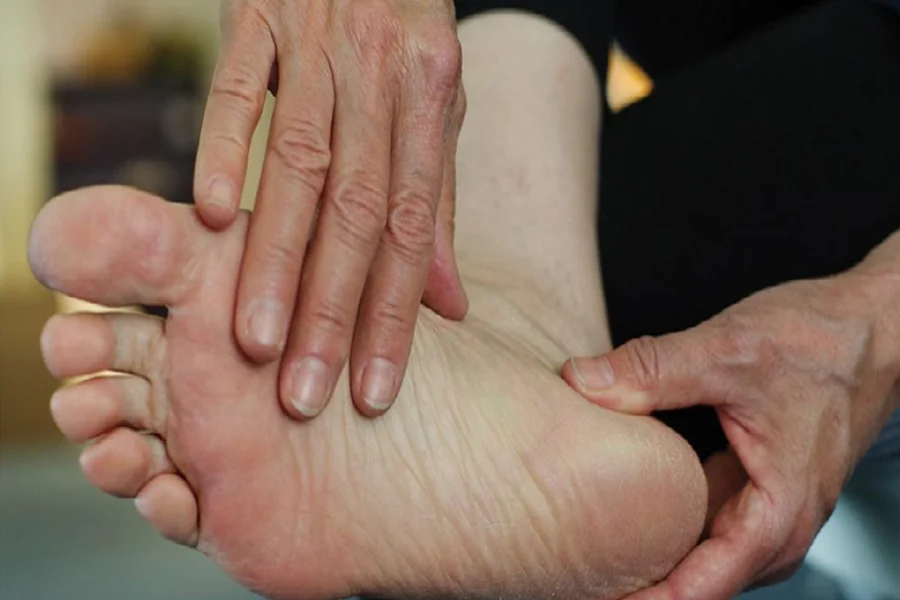
Look for redness. Swelling. Cracks. Blisters. Drainage. Skin color changes. Toenail problems. Pressure marks.
Use a mirror if needed.
One small issue caught early is manageable. One ignored wound can become months of appointments.
Dr. Hope Jacoby has spoken publicly about how many diabetic foot complications start with small problems patients assumed would heal on their own. That pattern repeats constantly in wound care.
The challenge is psychological as much as medical. People normalize discomfort. They minimize symptoms. They delay evaluation.
That delay carries consequences.
Movement still matters
Some diabetic patients become nervous about activity after developing foot issues. That can backfire.
Movement helps circulation, balance, muscle strength, and long-term mobility. The key is protecting the feet while staying active.
Walking shoes matter. Socks matter. Surface choice matters.
One useful strategy is what some clinicians call “movement with inspection.” Stay active, but check your feet afterward. Catch irritation early before it develops into tissue breakdown.
The bigger goal is preserving independence.
Mobility affects work, travel, social life, confidence, and daily function. Once mobility drops, other health problems often follow.
Public awareness is still far behind
Heart disease gets attention. Cancer gets attention. Diabetes gets attention.
Diabetic foot health still feels oddly invisible.
That is surprising considering the scale of the issue. Every year, roughly 154,000 Americans with diabetes undergo amputations, according to CDC-related estimates.
Many of those cases begin with wounds that initially looked manageable.
Public messaging often focuses heavily on glucose numbers while ignoring physical warning signs happening lower down the body.
That gap matters.
People need to know that foot health is not cosmetic maintenance. It is part of long-term survival and independence for patients with diabetes.
What should people actually do
The advice is not complicated.
Check the feet daily. Wear supportive shoes. Avoid walking barefoot outdoors. Keep blood sugar controlled. Stay active. Treat cuts quickly. Do not ignore swelling, drainage, redness, or wounds that are not improving.
Most importantly, stop assuming “small” means safe.
Diabetic foot problems usually build quietly before they become obvious. By the time symptoms interrupt daily life, the condition is often much harder to reverse.
That is why awareness matters now, not later.
The feet rarely ask for attention politely twice.